INSIGHTS · 21 November 2026
Microsoft Ads Now Shows Ads in Bing AI Overviews 2026
Microsoft Advertising has officially begun serving ads within Bing's AI Overviews, putting paid placements directly inside AI-generated answers. This is a major shift for PPC marketers as AI search becomes the new battleground for ad visibility.
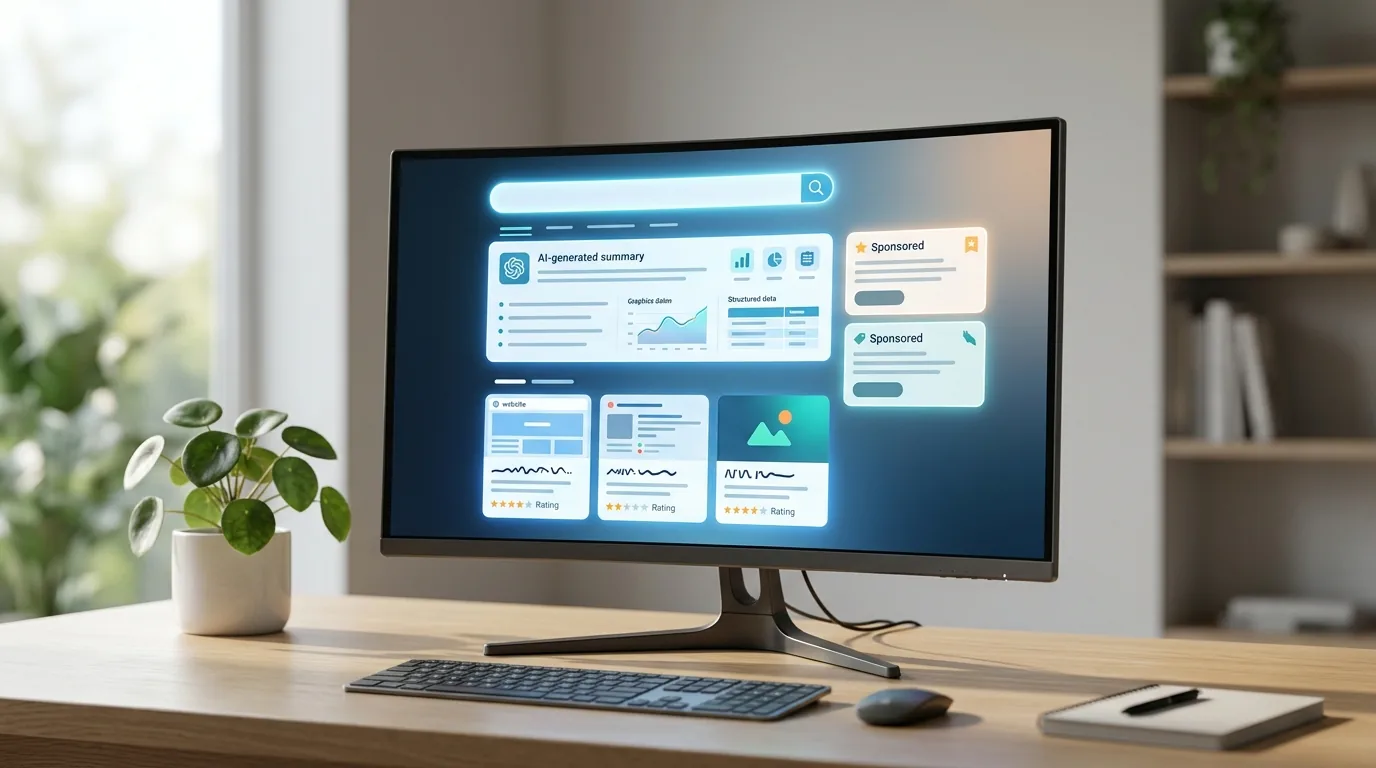
Microsoft has officially brought ads into Bing's AI Overviews, marking a significant shift in how paid search will work in 2026. For businesses running Microsoft Ads campaigns, this means your ads can now appear inside the AI-generated answer boxes at the top of Bing search results. If you have been sleeping on Microsoft Advertising, now is a good time to pay attention.
What Changed with Microsoft Ads AI Overviews
According to Search Engine Land, Microsoft Advertising has started showing ads directly within AI Overviews on Bing. This is the AI-generated summary section that Bing displays when a user asks a question or runs a conversational search. Previously, these AI-generated answers appeared without any paid placements alongside them.
Now, relevant ads can be pulled into this space, meaning advertisers have a new high-visibility placement to reach users at the exact moment they are looking for answers. This is not just a visual change. It represents a fundamental shift in where search budgets can show results.
Alongside this, Search Engine Land also reported that Microsoft Advertising has added URL inclusions to AI Max campaigns. This feature gives advertisers more control over which landing pages are matched to search queries within the AI-powered campaign type. Previously, AI Max campaigns had broader autonomy in selecting URLs, so this update addresses a common concern from advertisers who wanted tighter control.
Microsoft has also introduced "Made with AI" labels on AI-generated ad images, as covered by Search Engine Land. Any image that the platform generates automatically using artificial intelligence will now carry a visible label. This is a transparency move, and it aligns with broader industry efforts to make AI-assisted content clearly identifiable to users.
Finally, Search Engine Journal reported that Microsoft is rolling out its biggest bidding model upgrade in roughly a decade. The new smart bidding prediction models are being applied automatically to campaigns. The update promises faster target adjustments, smoother budget pacing, and improved performance for campaigns using target CPA and target ROAS strategies.
Why It Matters for Businesses Running Microsoft Ads
The placement of ads inside AI Overviews is not a small update. When users interact with Bing's AI-generated answers, they are typically in an active research or decision-making mindset. Getting your ad in front of a user at that precise moment is incredibly valuable, especially for high-intent searches like product comparisons, service lookups, or local business queries.
For businesses that have been frustrated by rising costs on Google Ads, Microsoft Ads AI Overviews represents a potentially less competitive placement, at least for now. Early adopters on new ad placements often enjoy lower cost-per-click before the space becomes crowded.
The URL inclusion feature for AI Max campaigns is also practically important. Many advertisers found that AI Max was sending traffic to pages that did not match the user's intent closely enough. Being able to specify which URLs are eligible gives you more control over the customer journey and should improve conversion rates when configured correctly.
The "Made with AI" label is worth understanding too. Users will now see a clear marker on any AI-generated image in your ads. This could influence click-through rates depending on your audience and industry. In some categories, users may actually appreciate transparency, while in others, they may prefer to see original brand photography.
The bidding model upgrade affects all Microsoft Ads accounts automatically. According to Search Engine Journal, the new models are designed to adjust bids faster when conditions change and to pace budgets more smoothly across the day. For small and medium businesses where every rupee of ad spend counts, more efficient budget pacing can directly reduce wasted spend.
Impact on Indian and Local Businesses
For businesses based in Indore, Bhopal, Mumbai, or any other Indian city, Microsoft Ads has historically been underutilised compared to Google Ads. This is partly because Bing's market share in India is smaller. However, Bing usage in India is growing among professionals, students, and corporate users, particularly those using Windows devices or Microsoft Edge by default.
With AI Overviews now carrying ads, the quality of traffic from Bing searches is likely to be higher than standard keyword-matched clicks. Users engaging with AI-generated summaries tend to be more informed and further along in their decision-making process. For local service businesses, real estate agencies, education institutes, and B2B companies, this is a placement worth testing.
Indian businesses also benefit from the fact that Microsoft Ads generally has lower competition and lower cost-per-click compared to Google Ads in most categories. Adding the AI Overviews placement into the mix gives local advertisers another cost-effective way to reach quality audiences without competing for the same expensive Google real estate.
What Students and Digital Marketing Learners Should Know
If you are studying digital marketing or preparing for a career in paid search, these updates from Microsoft Advertising are important to add to your knowledge base. Understanding how AI-driven placements work is quickly becoming a core skill for any PPC professional.
The concept of ads appearing inside AI-generated content is different from traditional search ads. In traditional search, you bid on keywords and your ad appears next to or above organic results. In an AI Overview placement, your ad is integrated within a synthesised answer. This requires thinking about relevance and context in a more holistic way.
Learning how to configure URL inclusions in AI Max campaigns, understanding transparency features like "Made with AI" labels, and studying how smart bidding models work are all practical skills that employers are beginning to look for. Add these to your portfolio projects or case studies when applying for digital marketing roles.
What You Should Do Now: An Action Checklist
- Audit your existing Microsoft Ads campaigns. Check whether your campaigns are eligible for AI Overview placements. Review your campaign settings and ensure your ad assets are complete and high quality.
- Review your AI Max campaign URL settings. Now that URL inclusions are available, go into your AI Max campaigns and specify the most relevant landing pages for each ad group or campaign theme.
- Check for "Made with AI" labels on your ad images. Log into your Microsoft Advertising account and review which images carry the new label. Decide whether to replace any AI-generated images with original brand visuals based on your audience and campaign goals.
- Monitor bidding performance after the smart bidding update. Since the new bidding models are rolling out automatically, keep a close eye on your CPA and ROAS metrics over the next few weeks. Look for changes in conversion rates and cost efficiency.
- Test a small budget specifically for AI Overview placements. Allocate a portion of your Microsoft Ads budget to test performance within AI Overviews. Track impressions, clicks, and conversions separately to understand the value of this new placement.
- Compare performance with your Google Ads campaigns. Use this as an opportunity to benchmark whether Microsoft Ads AI Overview placements deliver better or worse cost-per-acquisition than equivalent Google Ads placements in your category.
Common Mistakes to Avoid
One of the biggest mistakes advertisers make with new ad placements is simply activating them without thinking about creative quality. AI Overviews are answer-focused environments. Your ad copy needs to be clear, specific, and directly relevant to the question the user is likely asking. Generic brand awareness copy will not perform well here.
Another common mistake is ignoring the bidding model update. Because the new smart bidding changes are rolling out automatically, some advertisers assume they do not need to do anything. However, it is worth reviewing your target CPA and ROAS goals to make sure they are still realistic given any recent changes in your business or market conditions. Outdated targets can confuse the algorithm and lead to poor performance even with a better underlying model.
Finally, do not dismiss the "Made with AI" label as insignificant. In regulated industries like finance, healthcare, or legal services, using AI-generated imagery may raise trust concerns with potential customers. Take the time to audit your image library and use original visuals where it matters most for your brand credibility.
Frequently Asked Questions
What are Microsoft Ads AI Overviews?
Microsoft Ads AI Overviews refers to the placement of paid advertisements within the AI-generated summary sections that Bing displays at the top of search results. When a user asks a question on Bing, the search engine generates a conversational answer using AI, and advertisers can now have their ads shown within or alongside this AI-generated content.
Do I need to create separate campaigns to appear in Bing AI Overviews?
Based on the information reported by Search Engine Land, existing Microsoft Ads campaigns can be eligible for AI Overview placements. However, you should check your campaign settings and ensure your ad assets meet the quality requirements. It is also worth monitoring placement reports to confirm whether your ads are appearing in this format.
What does the "Made with AI" label mean for my ads?
The "Made with AI" label is a transparency marker that Microsoft Advertising now adds to any ad image that was generated using artificial intelligence tools within the platform. Users will be able to see this label on affected ads. As reported by Search Engine Land, this is part of a broader industry push to clearly identify AI-assisted content to end users.
Will the automatic smart bidding update affect my current campaign targets?
According to Search Engine Journal, the new bidding prediction models are rolling out automatically and are designed to improve performance for target CPA and target ROAS campaigns. Your existing targets should remain in place, but it is advisable to monitor your campaign performance closely in the weeks following the update and adjust your targets if needed to reflect any changes in cost efficiency or conversion behaviour.
Google Ads
Stop paying for clicks that never convert.
We build and manage Google Ads campaigns focused on leads and ROI, not vanity metrics.
Kamlesh Singad
Founder, Code With Kamlesh. Helped 200+ businesses scale through SEO, Google Ads & Social Media. 8+ years of digital marketing experience.
Comments (0)
No comments yet. Be the first to comment!