Search Intent in SEO: Complete Guide with Examples
Learn what search intent in SEO is, how to identify the four main intent types, and how to optimize your content to rank higher on Google search results.
Ranking on the first page of Google used to be largely a matter of matching keywords, building backlinks, and structuring your on-page tags correctly. If a page had decent domain authority and repeated the target phrase in key spots, it had a realistic shot at ranking.
Today, that approach routinely falls flat. You can write a technically sound, 4,000-word guide on a target topic, build clean links to it, and still find yourself stuck on page four. The reason is usually simple: the content does not give searchers what they came for.
Consider two search queries that look almost identical at first glance: "best CRM software" and "CRM software login."
d user reviews. They are evaluating tools. If you send them to a landing page with a single signup form, they will bounce immediately.
Conversely, a user typing "CRM software login" wants a direct link to sign in to their account. If you direct them to a 3,000-word comparison guide on how to choose a CRM, you have completely missed their goal.
Both queries contain the core term "CRM software," but the underlying goals are fundamentally different. Satisfying that underlying goal is what search intent is all about.
What Is Search Intent in SEO?
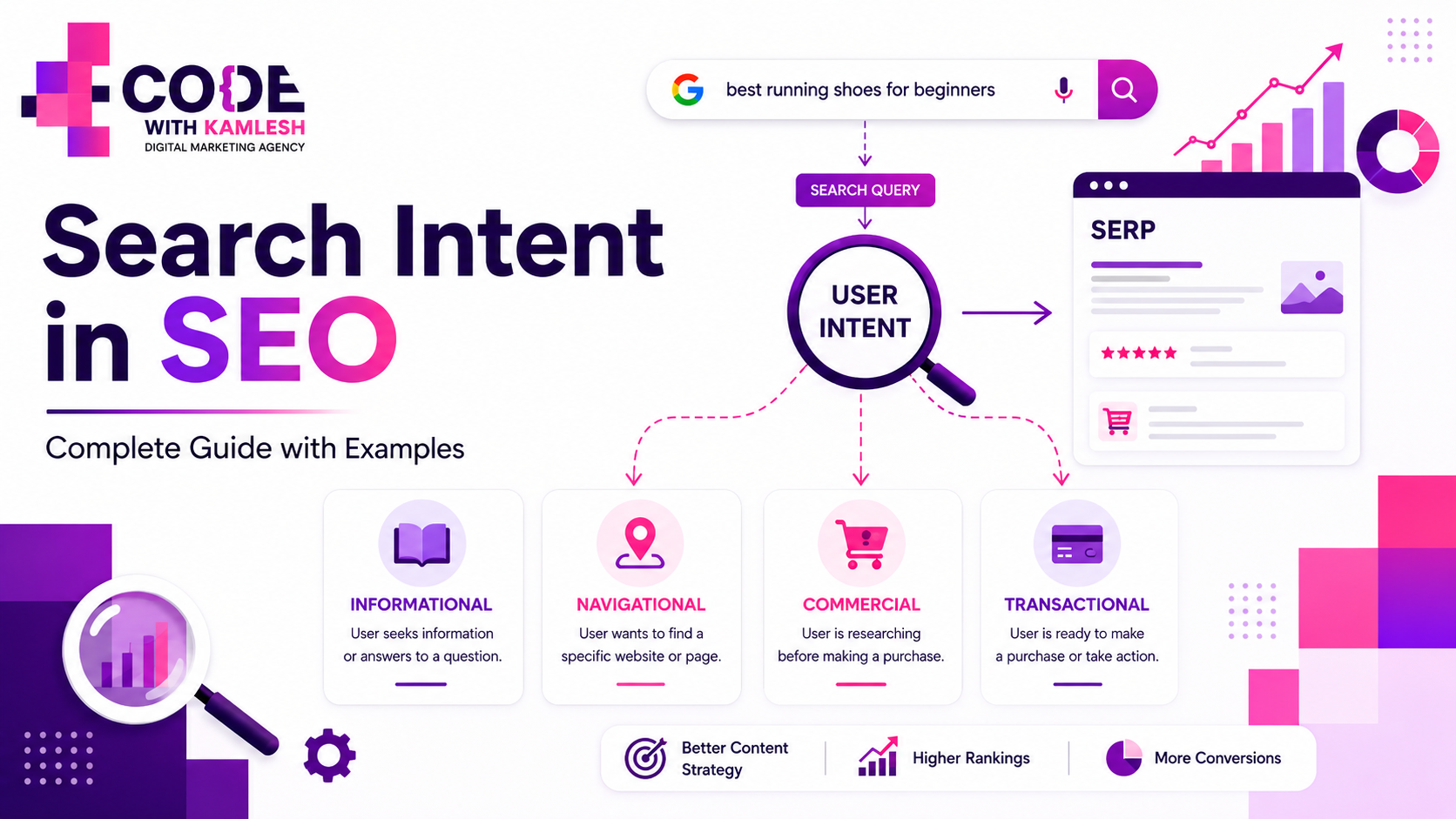
Search intent (often called user intent or keyword intent) represents the primary goal a person has when entering a search query into an engine like Google. It is the real-world problem they want to solve, the answer they need, or the specific website they want to access.
+-------------------------------------------------------------+
|                        Search Query                         |
|             (The exact phrase entered by a user)            |
+-------------------------------------------------------------+
                               |
                               v
+-------------------------------------------------------------+
|                        Search Intent                        |
|            (The underlying purpose behind the search)        |
+-------------------------------------------------------------+
                               |
         +---------------------+---------------------+
         |                     |                     |
         v                     v                     v
+-----------------+   +-----------------+   +-----------------+
|  Informational  |   |   Commercial    |   |  Transactional  |
|  "how to do X"  |   |   "best tools"  |   |  "buy product"  |
+-----------------+   +-----------------+   +-----------------+
When someone types something into a search bar, they are not looking for keywords; they are looking for outcomes. Google's business model relies on satisfying those expectations as quickly and accurately as possible. If Google consistently served educational articles to people trying to buy running shoes, or sales pages to students looking for historical facts, users would look for answers elsewhere.
To maintain trust, Google analyzes query patterns, page content, and user satisfaction signals to determine the ideal page format for every keyword.
- "Espresso machine clean instructions": The user needs a clear, step-by-step troubleshooting guide or a video showing how to descaling an espresso machine.
- "Breville Barista Express price": The searcher is evaluating an exact model, looking for current retail pricing, store availability, and shipping options.
- "Breville customer support": The searcher is experiencing an issue and wants a direct phone number, email form, or service portal.
The search engine's job is to recognize those distinctions and surface the exact content format required. Your job as a content creator or SEO strategist is to build pages that match those formats precisely.
Why Search Intent Is Important for SEO
Search intent is not just an on-page SEO checkbox; it forms the foundation of modern organic search performance. When your content matches intent, search engines and users both reward you. When it does not, no amount of technical optimization or backlink acquisition will keep you at the top of the SERP.
Google Rankings and Algorithm Alignment
Google's ranking systems prioritize helpful, reliable, and people-first content. Search algorithms evaluate whether a document directly answers the prompt implied by the query. Pages that fail to address the core query naturally drop out of competitive positions, making intent alignment a baseline requirement for sustainable organic rankings.
Organic Traffic Quality and Bounce Behavior
High search volume does not equal high traffic value. When a user clicks a search result and immediately discovers that the page does not answer their question—such as landing on a sales pitch when they wanted a definition—they hit the back button. This quick return to the search results signals that the page did not fulfill the query.
Matching intent ensures visitors stay, read, and interact with your site.
Content Relevance and User Experience
Writing about a topic broadly is rarely enough. Intent forces you to focus on the specific angle searchers care about. If searchers looking for "how to calculate burn rate" want a simple formula and a spreadsheet template, giving them a 1,500-word history of startup financing creates friction. Intent-driven content eliminates unnecessary fluff and delivers clear answers.
Conversion Rates and Commercial Efficiency
Aligning your pages with user intent dramatically improves conversion rates. When you map informational queries to educational assets (like detailed guides or checklists) and commercial queries to dedicated service or product landing pages, visitors encounter offers that fit their current mindset.
Why Search Volume Alone Is Misleading
A common mistake in keyword research is chasing raw search volume while ignoring the underlying intent. A keyword with 20,000 monthly searches might look attractive in your SEO tool, but if that query carries navigational intent for an established software brand, you will never capture meaningful traffic from it.
Similarly, targeting an informational keyword with a bottom-of-funnel sales page wastes resources. You might attract casual clicks, but those visitors have no current intent to buy. Understanding intent helps you prioritize terms that actually drive business outcomes.
The Four Main Types of Search Intent
To simplify intent analysis, the SEO industry generally groups search queries into four primary categories: informational, navigational, commercial investigation, and transactional.
+-------------------------------------------------------------------------+
|                        The 4 Main Intent Types                          |
+-------------------------------------------------------------------------+
| 1. Informational: Learning, researching, or solving a specific problem.  |
| 2. Navigational:   Looking for a specific website, brand, or login page. |
| 3. Commercial:     Comparing products, services, prices, or reviews.    |
| 4. Transactional:  Ready to purchase, subscribe, download, or hire.     |
+-------------------------------------------------------------------------+
1. Informational Search Intent
Searchers with informational intent want to learn something. They are looking for answers, explanations, recipes, data, or guides. These queries range from simple factual questions ("what time is it in Tokyo?") to complex research topics ("how does a diesel engine work?").
Common informational queries include:
- what is SEO
- how to do keyword research
- how does Google Search work
- benefits of local SEO
Informational Query: "how to clean cast iron pan"
Ideal Content Format:
+---------------------------------------------------------+
| [H1] How to Clean a Cast Iron Skillet (Step-by-Step)   |
| Quick Summary Box (Tools Needed: Salt, Brush, Oil)      |
| Step 1: Rinse and Scrub                                 |
| Step 2: Dry Thoroughly on the Stove                     |
| Step 3: Apply a Light Coat of Oil                       |
| Video Walkthrough / Common Mistakes to Avoid            |
+---------------------------------------------------------+
Content Formats That Work for Informational Intent
- In-depth guides and how-to articles: Structured, step-by-step walkthroughs that solve a problem completely.
- Definitions and overviews: Concise explanations placed right at the beginning of the page for users needing quick clarity.
- Tutorials and checklists: Action-oriented, practical frameworks users can follow immediately.
- Educational blog posts and research studies: Data-backed articles covering broader industry concepts.
If you are structuring an educational hub, understanding how informational queries feed into broader site architecture is critical. For practical tips on structuring content hierarchies, review our guide on [Internal Link: Relevant Keyword Research or SEO Blog].
2. Navigational Search Intent
Navigational searchers already know which website or web page they want to visit. Instead of typing the full URL into the address bar, they type the brand or service name directly into Google as a shortcut.
Common navigational queries include:
- Google Search Console login
- YouTube
- Ahrefs login
- Facebook Ads Manager
Navigational Query: "Ahrefs login"
User Mindset: "Take me directly to the login portal."
Action: Single-click destination. Unlikely to read secondary content.
Trying to rank an external site for a competitor's navigational query is rarely worth the effort. Searchers typing "Shopify login" have zero interest in reading an article about an alternative e-commerce platform; they just want to access their dashboard. Google almost always awards the top spot to the official brand domain for these terms.
3. Commercial Investigation Intent
Commercial investigation queries sit between education and action. Searchers with this intent know they have a problem and intend to spend money on a solution, but they have not finalized which product, service, or provider to choose. They use search engines to compare options, read reviews, check rankings, and weigh pros and cons.
Common commercial queries include:
- best SEO tools
- Ahrefs vs Semrush
- best laptops for students
- best SEO agency in Indore
- WordPress vs Shopify
Commercial Query: "Semrush vs Ahrefs"
Ideal Content Format:
+---------------------------------------------------------+
| [H1] Semrush vs Ahrefs: Which SEO Tool Is Better?       |
| Quick Verdict / Summary Comparison Table               |
| Deep Dive: Keyword Research Features Compared           |
| Deep Dive: Backlink Analysis Accuracy                   |
| Pricing & Value Breakdown                              |
| Final Recommendation Based on Use Cases                 |
+---------------------------------------------------------+
Content Formats That Work for Commercial Intent
- Comparison pages (X vs Y): Objective breakdowns comparing features, performance, limitations, and pricing.
- "Best-of" listicles: Curated roundups highlighting the top tools, agencies, or products for specific use cases.
- In-depth reviews: Unbiased evaluations of a single product or service with practical testing data.
- Alternatives pages: Solutions structured specifically for searchers looking to switch from a market leader (e.g., "Mailchimp alternatives").
4. Transactional Search Intent
Transactional searchers are at the end of the research phase and ready to take action. This usually means buying a product, signing up for a service, downloading software, or booking an appointment. The search query often contains specific commercial modifiers like "buy," "order," "pricing," "discount," or location-based service requests.
Common transactional queries include:
- buy iPhone online
- hire SEO expert
- book hotel in Goa
- SEO services in Indore
- WordPress development services
Transactional Query: "hire SEO consultant"
Ideal Content Format:
+---------------------------------------------------------+
| [H1] Professional SEO Consulting Services               |
| Clear Value Proposition & Deliverables Overview         |
| Client Case Studies & Verified Results                 |
| Pricing Packages or Custom Quote Request Form           |
| Contact Form / Direct Booking Calendar                  |
+---------------------------------------------------------+
Content Formats That Work for Transactional Intent
- Dedicated product pages: Clean e-commerce pages featuring clear product imagery, pricing, technical specifications, and a direct checkout button.
- Service pages: Clear descriptions of service packages, past results, client testimonials, and a consultation booking form.
- Pricing landing pages: Straightforward tables showing service tiers, inclusions, and clear calls to action.
- Category pages: Filterable e-commerce collection pages that let buyers browse in-stock inventory quickly.
For businesses looking to capture local clients who are actively looking to hire specialists, building targeted, conversion-focused landing pages is non-negotiable. If you need help structuring your business pages to capture these bottom-of-funnel searches, consider exploring our [Internal Link: Relevant SEO Services Page].
Search Intent Examples Across Different Categories
To understand how intent varies across different topics and business types, examine how query phrasing changes the required content format:
Keyword
Search Intent
What the User Wants
Best Content Type
what is technical SEO
Informational
Clear definition, key elements, and beginner explanations
Educational blog guide
how to fix crawl errors
Informational
Step-by-step troubleshooting instructions
Technical tutorial with screenshots
canva login
Navigational
Direct access to the Canva sign-in screen
Official login landing page
google search console
Navigational
Direct link to open the tool
Official homepage / tool dashboard
best project management software
Commercial
A curated list comparing top PM tools, pricing, and features
"Best of" comparison post
asana vs trello
Commercial
Direct side-by-side feature comparison to pick one
Head-to-head comparison article
best running shoes for flat feet
Commercial
Product recommendations tailored to a specific anatomical need
Curated product review list
buy standing desk online
Transactional
Online stores selling standing desks with checkout options
E-commerce category page
Commercial / Transactional
Accurate pricing options, specs, and immediate buying links
Product page or retail store comparison
emergency plumber in Leeds
Transactional / Local
Immediate contact number and service availability
Local service landing page with phone CTA
ahrefs pricing
Commercial
Clear breakdown of subscription tiers and limits
Official pricing page
python cheat sheet pdf
Informational
Quick downloadable syntax reference
Resource page with a direct PDF download
hire freelance copywriter
Transactional
Professional profiles, hourly rates, and hire forms
Marketplace or service booking page
hubspot crm review
Commercial
Unbiased breakdown of HubSpot's features, pros, and cons
Deep-dive review article
How Google Understands Search Intent
Google does not rely on simple keyword matching to determine what searchers want. Over the years, the search engine has transitioned from a literal text-matching system to a semantic search engine capable of understanding natural language nuances.
The search engine interprets intent through several interconnected systems:
+------------------------------------------------------------------------+
|                   How Search Engines Interpret Intent                  |
+------------------------------------------------------------------------+
|  1. Natural Language Processing: Understanding entity context & syntax |
|  2. Historical Search Patterns: Evaluating what past searchers chose   |
|  3. Freshness Requirements: Detecting when queries demand live updates |
|  4. Geographic Context: Factoring in user location and proximity       |
|  5. SERP Interaction Signals: Monitoring overall query satisfaction    |
+------------------------------------------------------------------------+
1. Natural Language Processing and Entity Context
Modern search algorithms parse query structure, identifying how prepositions, modifiers, and related entities interact. For example, Google understands that "how to play guitar without a pick" requires solutions that explicitly exclude standard plectrum techniques. According to Google Search Central documentation, search algorithms are engineered to surface content created to benefit people, rather than content designed solely to manipulate search engine rankings.
2. Historical Search Patterns
Search engines process billions of queries every day. By evaluating aggregate search behavior over time, algorithms learn that people searching for "apple stock" want financial tickers, while those searching for "apple pie recipe" want cooking instructions. The system adjusts the SERP layout based on these historical preferences.
3. Geographic and Device Context
A search query like "best pizza" typed on a mobile device in downtown Chicago signals local, immediate transactional intent. Google responds by serving a Local Map Pack with opening hours and reviews. The exact same query entered on a desktop in a rural area might return an editorial list of famous pizza styles across the country.
4. Freshness and Query Deserves Freshness (QDF)
For queries related to current events, elections, sports scores, or trending topics, search intent skews heavily toward freshness. An article explaining the history of an event will not rank when searchers are looking for real-time live updates.
How to Identify Search Intent for Any Keyword: A Step-by-Step Method
Never guess what a user wants based on the keyword alone. Follow this structured five-step workflow to verify search intent before you outline or write a single paragraph.
Step 1: Check Keyword Modifiers (what, best, buy, near me)
   │
   ▼
Step 2: Perform a Clean Incognito Google Search
   │
   ▼
Step 3: Analyze Top-Ranking Page Formats (guides, products, tools)
   │
   ▼
Step 4: Audit SERP Features (snippets, local packs, shopping)
   │
   ▼
Step 5: Identify the Dominant vs. Secondary Intent
Step 1: Analyze the Keyword Modifiers
Start by examining the language used in the search phrase. Certain words instantly reveal user intent:
- Informational modifiers: how, what, why, guide, tutorial, ideas, tips, examples, learn
- Commercial modifiers: best, top, vs, review, comparison, alternatives, cheap, rated
- Transactional modifiers: buy, purchase, order, coupon, discount, pricing, for sale, hire
- Local modifiers: near me, in [city], open now, clinic, shop, agency
Modifiers offer an initial clue, but you must always verify your hypothesis against actual search results.
Step 2: Search the Keyword on Google Manually
Open a private or incognito browser window (to minimize personalized search history bias) and type your target keyword into the search bar. The first page of Google is the most accurate blueprint of what the search engine believes users want.
Step 3: Analyze the Top-Ranking Pages
Look closely at the first 3 to 5 organic results. Note the page types holding the top spots:
- Are they long-form blog articles?
- Are they dedicated e-commerce product category pages?
- Are they interactive calculators or web tools?
- Are they corporate service landing pages?
If the top 5 results are all detailed step-by-step guides, Google has established that the intent is informational. Publishing a short product landing page for that keyword will not work.
Step 4: Check Active SERP Features
The specific widgets Google displays on the results page indicate the primary format users expect:
- Featured Snippet: Signals a quick, factual question that requires a direct, concise answer at the top of your page.
- People Also Ask (PAA): Highlights closely related secondary questions you should address in your subheadings.
- Local 3-Pack: Confirms that searchers expect physical, nearby business locations.
- Google Shopping Carousel: Signals clear transactional intent with strong commercial purchase behavior.
- Video Carousel: Indicates users prefer visual demonstrations (common with fitness routines, software setups, or repair tasks).
To monitor whether your pages maintain alignment and capture these search features over time, refer to the official Google Search Console documentation for tracking performance and index coverage.
Step 5: Determine the Dominant Intent
Most search results show a clear dominant intent where 80% to 100% of top ranking pages follow the exact same format.
However, some keywords display mixed or fractured intent. For a broad query like "accounting software," the SERP might show two comparison articles, two direct software homepages, and a general educational definition. When targeting mixed-intent terms, identify the dominant format, or build content that cleanly addresses the primary angle while linking to dedicated pages for secondary intents.
The 3 Cs of Search Intent
When auditing the SERP for a target keyword, break down your analysis using a simple framework: The 3 Cs of Search Intent—Content Type, Content Format, and Content Angle.
+------------------------------------------------------------------------+
|                        The 3 Cs of Search Intent                       |
+------------------------------------------------------------------------+
| Content Type   -->  The overall vehicle (Blog post, Product, Landing)  |
| Content Format -->  The structure (How-to guide, Listicle, Tool, X vs Y) |
| Content Angle  -->  The unique hook (Beginners, Fast, Free, Year-based)|
+------------------------------------------------------------------------+
1. Content Type
Content type refers to the broad category of the page. Common content types include:
- Blog posts or educational articles
- E-commerce product landing pages
- E-commerce category/collection pages
- Dedicated service pages
- Interactive web tools or software utilities
Example: For the search query "vintage leather jackets," the dominant content type is an e-commerce category page. Publishing an editorial blog post titled "History of Vintage Leather Jackets" will not rank for this keyword.
2. Content Format
Content format describes the structural blueprint of the page. Common formats include:
- Step-by-step "how-to" tutorials
- Curated list posts (e.g., "15 Best Tools...")
- Head-to-head comparison articles (e.g., "Tool A vs Tool B")
- Individual product reviews
- Opinion pieces or thought leadership essays
Example: If you search "how to start a podcast," the top results are not listicles of random ideas; they are chronological, step-by-step guides. If your article is formatted as a disorganized list of random tips, it fails the content format test.
3. Content Angle
Content angle is the specific selling point, perspective, or unique hook that top-ranking pages use to attract clicks. Common angles include:
- Beginner-friendly: "For complete beginners," "Simple 101 guide"
- Time-sensitive/Updated: "Updated for 2026," "Current guide"
- Speed/Efficiency: "In 15 minutes or less," "Quick setup"
- Cost/Budget: "Free methods," "Budget-friendly options"
- Data-backed/Proven: "Based on 500+ tests," "Scientific approach"
Example: If every ranking page for "best meal prep containers" features the angle "cheap & durable," pitching an angle focused exclusively on "luxury designer meal boxes" might limit your organic visibility. Match the primary angle first, then bring your own unique data or insights to stand out.
Search Intent vs. Keywords: What Is the Difference?
While keywords and search intent are closely linked, they represent two distinct parts of search strategy.
Keyword (The Input)
"email marketing software"
       │
       ▼
Search Intent (The "Why")
"I need a comparison of reliable email platforms to choose one for my company."
       │
       ▼
Resulting Content Strategy
A detailed comparison guide reviewing features, deliverability rates, and pricing tiers.
- The Keyword is the exact string of text entered into the search bar. It is the literal input.
- The Search Intent is the human problem, psychological motivation, and explicit objective behind those words. It is the reason for the input.
Relying entirely on keyword strings without analyzing intent leads to strategic errors. For instance, you might identify the keyword "SEO reporting."
One team might write a 4,000-word essay explaining the history and importance of SEO reporting. Meanwhile, another team analyzes the SERP, notices that all top-ranking pages offer downloadable, free Google Looker Studio templates, and builds a customizable dashboard template.
The second team wins the top ranking every time—not because they repeated the keyword more often, but because they understood why the user searched for it.
How to Optimize Content for Search Intent
Once you understand the dominant intent for your target topic, apply these concrete optimization practices to structure and refine your page.
+------------------------------------------------------------------------+
|                    Search Intent Optimization Checklist                |
+------------------------------------------------------------------------+
| [ ] Choose the exact page type dictated by the current SERP            |
| [ ] Structure content using the preferred format (list, guide, table)  |
| [ ] Provide direct answers above the fold (BLUF principle)             |
| [ ] Answer supporting questions sourced from "People Also Ask"         |
| [ ] Match calls to action (CTAs) to the user's current intent stage    |
| [ ] Keep commercial pages focused on conversion paths                  |
+------------------------------------------------------------------------+
1. Match the Page Format to the Current SERP
If the top-ranking results are long-form comparison tables, build a clean comparison table. If the top results are concise, interactive calculators, do not force the user to scroll through 2,500 words of background text to find the input fields.
2. Answer the Core Question Above the Fold (BLUF Principle)
Use the BLUF method (Bottom Line Up Front). Provide the essential answer, definition, or solution in your opening sections before diving into deeper nuances. Searchers appreciate quick clarity. Forcing users to scroll through generic introductory fluff just to find a simple definition increases bounce rates.
3. Cover Natural Secondary Questions
Inspect the "People Also Ask" box and search engine related searches for your primary topic. Incorporate these related questions as dedicated H2 or H3 subheadings. If someone searches for "how to propagate houseplants," they will likely also want to know:
- When is the best time of year to propagate?
- Should I propagate in soil or water?
- How long does root growth take?
Addressing these natural follow-up questions keeps the user on your page, eliminating their need to return to Google for additional context.
4. Adjust Calls to Action (CTAs) Based on Intent
Align your lead magnets and conversion pathways with the searcher's mindset:
- Informational Intent: Offer a free downloadable checklist, an email course, or a related guide. Avoid hard sales pitches.
- Commercial Intent: Offer free trials, product demo videos, or detailed case studies.
- Transactional Intent: Provide direct, frictionless "Buy Now," "Book an Appointment," or "Request a Proposal" forms.
Search Intent and Keyword Research
Integrating intent analysis directly into your keyword research saves you from creating pages that have no chance of ranking.
Keyword Research Process:
1. Identify Seed Keywords ──> 2. Filter by Intent ──> 3. Map to Dedicated URLs
Instead of organizing keyword lists solely by search volume or keyword difficulty metrics, add a mandatory column for Target Search Intent and Recommended Page
Type.
Sample Keyword Intent Mapping Table
Keyword
Monthly Search Context
Intent Type
Recommended Page Type
what is cloud computing
High volume educational interest
Informational
Comprehensive beginner's guide
cloud storage solutions for enterprise
Moderate volume, business evaluation
Commercial
Curated solutions guide / comparison
aws vs google cloud pricing
Targeted volume, direct tool evaluation
Commercial
In-depth cost comparison table
hire aws certified architect
Low volume, high commercial value
Transactional
Service page with contact/booking form
aws management console login
Purely brand access
Navigational
None (do not target)
Never attempt to force keywords with contradictory intents onto a single page. A page designed to explain "what is an enterprise CRM" cannot simultaneously serve as an efficient checkout page for an off-the-shelf software subscription. Give distinct intents their own dedicated URLs.
Search Intent and the Customer Journey
Search intent mirrors the classic marketing funnel. As prospective customers move from problem identification to vendor selection, their search phrasing changes systematically.
Awareness (Top of Funnel)
"Why is my website loading slowly?"
       │
       ▼
Consideration (Middle of Funnel)
"Best CDN providers for WordPress"
       │
       ▼
Decision / Action (Bottom of Funnel)
"Cloudflare enterprise pricing" / "Hire web performance specialist"
1. Awareness Stage (Informational Intent)
- The searcher is identifying their problem.
- Queries: "why is my website traffic dropping," "what is core web vitals"
- Content Asset: Educational blog posts, troubleshooting guides, infographics.
2. Consideration Stage (Commercial Investigation Intent)
- The searcher knows the solution category and evaluates options.
- Queries: "best technical SEO audit tools," "Screaming Frog vs Sitebulb"
- Content Asset: Tool roundups, feature comparisons, video reviews.
3. Decision Stage (Transactional Intent)
- The searcher is ready to choose a provider or tool.
- Queries: "Sitebulb discount code," "hire technical SEO agency"
- Content Asset: Service landing pages, transparent pricing pages, checkout funnels.
Search journeys are rarely linear. A buyer might read a comparison article, leave your site, search for a transactional query three days later, and convert. Creating dedicated, intent-aligned content across all stages ensures your brand remains visible throughout the entire customer journey.
Search Intent for Local SEO
Local search intent carries its own unique dynamics. When a query contains explicit local modifiers (such as "dentist in Indore" or "emergency plumber near me"), or implies local utility (like "oil change"), Google prioritizes proximity, prominence, and business legitimacy over standard long-form text.
Local Query: "dentist in Indore"
SERP Priority:
+---------------------------------------------------------+
| [Google Maps 3-Pack with Reviews & Distance]            |
| 1. Practice A (4.9 Stars, 120 Reviews) - Open Now       |
| 2. Practice B (4.8 Stars, 85 Reviews) - Open Now        |
| 3. Practice C (4.7 Stars, 210 Reviews) - Phone Number   |
+---------------------------------------------------------+
| Organic Results: Local Clinic Landing Pages & Reviews   |
+---------------------------------------------------------+
Essential Elements for Local Intent Pages
- Google Business Profile optimization: Maintain accurate business categories, opening hours, physical addresses, and verified reviews.
- Localized Landing Pages: Include city-specific street names, landmarks, neighborhood references, and embedded maps on your service landing pages.
- Visible Contact Information: Display your Name, Address, and Phone number (NAP) consistently across all pages.
- Direct Booking Actions: Provide click-to-call buttons and instant appointment scheduling forms directly above the fold on mobile devices.
Search Intent for E-Commerce SEO
E-commerce websites often suffer from intent mismatches because store owners frequently target high-volume informational keywords with raw product pages, or transactional keywords with generic blog articles.
Query Type: Broad Product Search ("men's leather boots")
Correct Target: Category / Collection Page (Allows filtering and browsing)

Query Type: Specific SKU / Model Search ("Red Wing Iron Ranger 8111 size 10")
Correct Target: Individual Product Page (Shows exact stock, price, and Buy button)
- Broad Product Categories: Queries like "ergonomic office chairs" signal that the buyer wants to browse a collection. Direct them to a filterable category page featuring multiple brands, price filters, and stock status.
- Specific Product SKUs: Queries like "Herman Miller Aeron size B graphite" indicate the searcher has picked a specific product. Send them directly to the product detail page with an active "Add to Cart" button.
- Product Research: Queries like "best office chairs for back pain" require a curated buying guide comparing multiple chairs, rather than dropping the user onto a single product page.
Search Intent for Service-Based Businesses
Service providers (agencies, consultants, contractors, legal professionals) must clearly separate educational advice from commercial offerings.
Informational (Blog):
"How often should a roof be inspected?"
       │
       ▼ (Natural Internal Link)
Commercial / Transactional (Service Page):
"Residential Roof Inspection Services in [City]"
- The Educational Blog Strategy: Use blog articles to answer industry-related questions (e.g., "How much does custom software development cost?"). These build authority and capture early-stage prospects.
- The Commercial Service Page Strategy: Direct high-intent queries (e.g., "Custom software development agency in [City]") to dedicated service landing pages. These pages should highlight client testimonials, case studies, deliverables, and a clear consultation inquiry form.
Attempting to turn every informational blog post into an aggressive sales pitch frustrates readers. Let your educational content educate, and use natural internal links to invite interested prospects to explore your service pages.
8 Common Search Intent Mistakes to Avoid
Even experienced teams make strategic mistakes when evaluating user intent. Watch out for these common missteps:
+------------------------------------------------------------------------+
|                      Common Search Intent Mistakes                     |
+------------------------------------------------------------------------+
| 1. Targeting informational keywords with commercial landing pages      |
| 2. Answering transactional queries with bloated blog posts             |
| 3. Prioritizing search volume over query intent                        |
| 4. Never inspecting the live Google SERP manually                      |
| 5. Trying to rank a single page for multiple contradictory intents     |
| 6. Adding unnecessary historical fluff to simple how-to guides         |
| 7. Neglecting changing intent over time                                |
| 8. Misaligning calls to action with the searcher's funnel stage        |
+------------------------------------------------------------------------+
1. Targeting Informational Queries with Commercial Sales Pages
If a user searches "how to clean suede shoes," they want a tutorial. Sending them to a product page selling shoe protector spray results in an immediate bounce. Provide the cleaning guide first, then mention your cleaning product naturally as part of the solution.
2. Answering Transactional Queries with Bloated Blog Posts
When someone searches "buy domain name," they want a search box to register a domain immediately. If you send them to a 3,000-word article titled "History of Domain Name Extensions," they will leave and purchase from a competitor.
3. Prioritizing Search Volume Over Query Intent
Targeting broad terms with massive search volume might impress stakeholders on paper, but if that traffic consists entirely of students seeking broad definitions, it will not generate leads or revenue for your business.
4. Failing to Inspect the Live SERP Manually
Relying entirely on automated SEO software metrics without looking at the live search results leads to flawed strategies. Always verify what Google currently ranks for the target phrase before writing.
5. Trying to Rank One Page for Multiple Contradictory Intents
Trying to make a single URL serve as a beginner's guide, a software review, an interactive tool, and a checkout page weakens its focus. Create distinct pages for distinct intents.
6. Adding Unnecessary Fluff to Simple Answers
If a searcher looks for "meta description character limit," provide the number (150–160 characters) right away. Do not make them read four paragraphs on the history of search engines before giving the number.
7. Neglecting Changing Intent Over Time
Search intent is not static. A query that once returned simple blog articles might shift to favor interactive software tools or video walkthroughs over time. Periodically audit your key pages to ensure they still match current SERP patterns.
8. Misaligning CTAs with the Visitor's Funnel Stage
Placing a high-friction "Schedule an Enterprise Demo Call" pop-up on a high-level educational guide creates unnecessary resistance. Match the ask to the reader's current intent.
Can Search Intent Change Over Time?
Search intent evolves alongside technology, consumer habits, and global events. A query can shift its primary intent gradually or overnight.
A clear historical example is the search query "zoom." For years, "zoom" carried mixed informational and navigational intent related to camera lenses, optical zoom technology, and general definitions. In early 2020, as remote work expanded worldwide, the intent shifted almost entirely to navigational and transactional queries for the Zoom video conferencing platform. Google adapted its search results accordingly within weeks.
Similarly, queries like "crypto tax reporting" were once purely informational definitions. Today, searchers typing that phrase expect specialized tax calculation software, SaaS tools, and certified accountants.
To prevent organic traffic decay, schedule regular reviews of your core revenue-driving keywords. If rankings slip despite strong technical health and backlinks, check the SERP to see if the dominant content format or angle has shifted.
How to Perform a Search Intent Audit
A regular search intent audit helps you spot mismatches on existing pages and reclaim lost organic rankings.
Step 1: Export Top Keywords and Landing Pages from Search Console
   │
   ▼
Step 2: Assign Intent Types (Informational, Commercial, etc.) to Each Keyword
   │
   ▼
Step 3: Compare Assigned Intent Against the Current Live SERP
   │
   ▼
Step 4: Flag Mismatched URLs (e.g., Blog Post ranking for a Product query)
   │
   ▼
Step 5: Rewrite, Restructure, or Consolidate Pages to Match the SERP
- Export Keyword Data: Download your top 100 organic search queries and their corresponding landing pages from Google Search Console.
- Tag Current Intent: Label each query as Informational, Commercial, Transactional, or Navigational.
- Compare Against the SERP: For underperforming pages (positions 5–20), manually search the primary keyword. Check if the top 3 results use a different content format, type, or angle than your page.
- Identify Gaps: Look for mismatches. Are you trying to rank a generic service page for a term where Google only ranks detailed listicles? Are you serving a text article where Google prefers a step-by-step video or an interactive tool?
- Update and Refactor: Update the underperforming page to match the dominant format. Adjust headings, add comparison tables, remove fluff, or build a dedicated new page if the intent requires a completely different content type.
Advanced Search Intent Strategies for SEO Professionals
For experienced practitioners managing competitive websites, identifying basic intent is just the starting point. Use these advanced tactics to build an edge:
1. SERP Similarity Analysis
Before deciding whether to create a new page or target a secondary keyword with an existing URL, compare the SERPs for both terms. If 7 out of 10 ranking URLs are identical across both searches, Google treats them as sharing the same core intent. You can target both terms with a single page. If only 1 or 2 URLs overlap, create separate, dedicated pages.
2. Identifying and Exploiting Intent Fractures
When a SERP displays a split between two different content formats (e.g., three comparison posts and three interactive software tools), the intent is fractured. This presents an opportunity: identify the weaker content format on the page, build a significantly better version, and claim that slice of search visibility.
Fractured SERP Example ("mortgage payment formula")
- 40% of Results: Educational articles showing the raw mathematical equation
- 60% of Results: Interactive web mortgage calculators
Strategy: Build a page featuring an interactive calculator at the top, followed by the fully worked math formula below.
3. Evaluating Conversion Intent Alongside Search Volume
A keyword with 300 monthly searches and strong commercial intent (e.g., "enterprise SOC 2 compliance software pricing") often delivers more pipeline value than a generic educational term with 30,000 monthly searches (e.g., "what is compliance"). Factor intent directly into your SEO revenue forecasts.
Internal Linking and Search Intent
Strategic internal linking creates clear paths for users to move naturally from top-of-funnel research to bottom-of-funnel conversion pages.
Instead of placing generic, aggressive sales banners inside informational guides, use contextually relevant anchor text to direct readers toward the next logical step in their research journey.
Informational Article:
"What Is Technical SEO?" (User learns about site speed and indexing issues)
       │
       │ (Contextual Internal Link: "professional technical audit services")
       ▼
Transactional Page:
"Technical SEO Services & Auditing Landing Page"
For example, an educational article explaining "how to conduct a backlink audit" can include a natural contextual link to your specialized backlink analysis tool or client consulting page. This provides value to readers who want professional help while preserving an educational reading experience for DIY searchers.
Search Intent Pre-Publishing Checklist
Run through this quick sanity check before publishing any new piece of content:
- Target Query Identified: Have you identified the single primary search query for this page?
- SERP Verified: Did you check the current live Google first page in an incognito window?
- Content Type Aligned: Does your page type (blog post, service page, category page) match what Google currently ranks?
- Content Format Correct: Is your layout structured as the SERP expects (e.g., step-by-step guide vs. curated list vs. direct product table)?
- Content Angle Matched: Does your headline address the angle searchers care about (e.g., beginners, speed, cost, comprehensiveness)?
- BLUF Method Applied: Is the core answer delivered early on the page before secondary context?
- Related Questions Covered: Have you addressed top "People Also Ask" questions within your H2/H3 subheadings?
- Appropriate CTA Configured: Does your call to action match the user's current buying stage?
Frequently Asked Questions
What is search intent in SEO?
Search intent is the primary purpose behind a user's search query. It explains what problem the searcher is trying to solve, what information they want, or what action they plan to take.
What are the four main types of search intent?
The four primary types are:
- Informational: Seeking answers, guides, or data.
- Navigational: Looking for a specific brand, tool, or login page.
- Commercial Investigation: Comparing products, reading reviews, or evaluating solutions.
- Transactional: Ready to purchase, book, subscribe, or download.
Why is search intent important for SEO?
Aligning content with search intent is essential because Google's ranking systems prioritize pages that satisfy user queries accurately. Matching intent reduces bounce rates, improves engagement metrics, and increases organic conversion rates.
How do I identify the search intent of a keyword?
Look at keyword modifiers (such as "how to," "best," or "buy") and search the keyword manually on Google. Analyze the top 5 organic results and active SERP features to see which content types, formats, and angles dominate the first page.
Can a single keyword have multiple search intents?
Yes. Some queries have mixed or fractured intent, meaning different searchers want different things. For example, a search for a broad topic might return a mix of educational definitions, product category pages, and comparison articles.
What is commercial search intent?
Commercial intent describes searches by users who plan to buy a product or service in the future, but need to compare options first. Examples include "best CRM for startups" or "Semrush vs Ahrefs."
Can search intent change over time?
Yes. User expectations, market trends, and real-world events can shift how people search. When intent shifts, Google updates the SERP layout, making regular content audits necessary for maintaining top rankings.
How does search intent affect keyword research?
Search intent helps you qualify keywords by business value rather than search volume alone. It ensures you map informational queries to educational assets and transactional queries to dedicated sales or service pages.
Modern SEO is not about finding ways to outsmart search algorithms. It is about understanding the real human problem behind a search query and building the most helpful, clear, and direct resource available for that problem.
Before you write your next article, design a new landing page, or map out a content calendar, take two minutes to review the live Google search results. Let the search engine show you what users expect, identify gaps where existing results fall short, and build content tailored specifically to that intent.
© 2026 Code With Kamlesh. All rights reserved.
Kamlesh Singad
Founder, Code With Kamlesh. Helped 200+ businesses scale through SEO, Google Ads & Social Media. 8+ years of digital marketing experience.
Comments (0)
No comments yet. Be the first to comment!